Christian Lantern Layered Laser Cut File
A Quiet Light — First Impressions That Stick
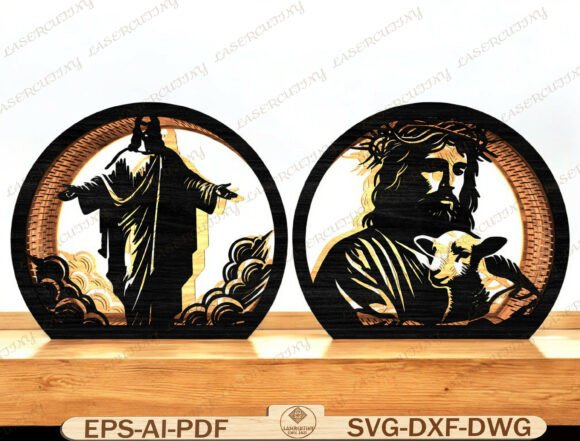
The moment I opened the Christian Lantern Layered Laser Cut File, I didn’t see “just another religious motif.” I saw intention. The lantern shape is soft but grounded—rounded edges, a gentle arch at the top, subtle vertical lines suggesting light bars rather than rigid geometry. There’s breathing room in the negative space, and the layered structure (even before stitching) hints at depth: outer frame, inner glow, maybe a cross or flame detail nested just so. It feels reverent without being stiff, traditional without leaning into cliché. This isn’t a design shouting for attention—it’s one that earns it through quiet confidence. For a designer who regularly translates meaning into thread, that matters more than sharp corners or flashy fills.
Where It Lives Best: Real Projects, Not Just Pixels
I tested the Christian Lantern Layered Laser Cut File as the centerpiece of a custom embroidered tote bag for a local faith-based bookstore—a project where clarity, warmth, and durability all had to align. On natural canvas, with cream thread on the outer layer and pale gold in the inner glow, it stitched cleanly at 4.2" wide. The satin stitch held crisp definition along the lantern’s curve, and the fill stitch in the central area stayed breathable—not dense enough to stiffen the fabric, but rich enough to read from three feet away. It also worked beautifully as a baby embroidery piece on a 100% cotton receiving blanket: small enough to feel tender, layered enough to avoid looking flat or cartoonish.
Other real-world fits? A sweatshirt embroidery for a church youth group—scaled up to 5.5", it retained its grace without bleeding into fuzziness. As an embroidered patch sewn onto denim aprons for a Christian women’s retreat, it added handmade sincerity without overwhelming the garment’s utility. And yes—it even translated well into a printable mockup for an Etsy seller’s digital embroidery file listing. The layers gave her product shots dimension; customers commented on how “real” it looked before they’d even stitched it.
Where to Pause—and Why
This design doesn’t force itself everywhere. On thin or stretchy fabric—like lightweight jersey tees or baby rib knit—it needs extra stabilization. Without a medium-weight cutaway stabilizer underneath, the inner glow layer can pucker slightly where the satin stitch meets the fill. On dark fabric, contrast becomes critical: pale thread colors vanish unless you adjust density or add a subtle underlay. And while it scales gracefully upward, shrinking it below 3" starts to compress the delicate layering—tiny corners lose definition, and the implied “light” effect blurs.
Caps and curved surfaces are doable—but only with careful hooping and a low-profile bobbin thread. I tried it on a structured cotton cap at 3.75", and the lantern’s base held well, but the upper curve softened just enough that the flame detail needed a slight manual tweak in my editing software before stitching. Also worth noting: if you’re planning frequent washing (think kids’ clothes or kitchen towels), confirm the stitch density supports longevity—some versions of layered designs pack too much fill in tight zones, risking wear over time.
What It Adds to Your Finished Product
It elevates perceived value—not by complexity, but by cohesion. Customers don’t just see a lantern; they sense care in the spacing, reverence in the restraint, and craftsmanship in the balance between line and light. That builds trust. For Etsy sellers and small shop owners, that translates directly into fewer “Is this hand-stitched?” questions and more “I’ll gift this to my sister-in-law”—which means higher average order value and repeat buyers.
It also strengthens brand consistency for faith-based craft businesses. Unlike generic crosses or doves, the Christian Lantern Layered Laser Cut File carries narrative weight (“Let your light shine”) without needing text—making it ideal for minimalist branding, nursery decor, or wedding gifts where subtlety reads as sophistication. And because it’s built as a layered laser cut file—not a single flat outline—it invites customization: swap thread colors for seasonal palettes (deep navy + silver for Advent, sage + ivory for spring baptisms), or pair it with monogrammed initials on a pillow cover for personalized gifts that feel both sacred and singular.
Practical Notes Every Embroidery Designer Should Run Through
- Test first—on scrap fabric matching your final project’s weight and texture. Watch how the layers interact at seam allowances or curved hems.
- Check thread color contrast on both light and dark backgrounds. What reads softly on oatmeal linen may disappear on charcoal fleece.
- Review stitch density in the inner glow zone—too dense = stiffness; too sparse = loss of luminous effect.
- Confirm hoop size early. Even though it’s a layered laser cut file, some versions require a 5x7 hoop minimum for full clearance.
- Inspect small details in your embroidery software: are the flame tips or cross elements fully digitized, or do they rely on user-added accents?
- Try black-and-white mockups—this design relies on tonal contrast, not color, so grayscale previews reveal clarity issues fast.
- Use proper stabilizer—especially for textured fabrics like terry cloth tea towels or loopback sweatshirts.
- Verify licensing before selling finished items or bundling the Christian Lantern Layered Laser Cut File into your own digital embroidery file packs. As a Graphic Templates asset, usage rights vary—and commercial embroidery projects demand clarity upfront.
Final Thought: A Design That Serves the Maker and the Meaning
This isn’t just another machine embroidery design you drop into a project and walk away from. The Christian Lantern Layered Laser Cut File asks for thoughtful placement, respectful execution, and alignment with purpose. When used well—in a custom apparel piece, a handmade product with heart, or a boutique’s signature holiday embroidery—it doesn’t just decorate. It resonates. And for designers, sellers, and makers building something meaningful stitch by stitch, that kind of resonance is rare, valuable, and quietly unforgettable.